AI GTM Readiness & Compliance Framework
AI governance doesn’t end inside the model but it extends into how the product is positioned, sold, and understood.
I built this framework after watching teams rush AI features to market without the guardrails, alignment, or clarity needed to protect customers and the business.
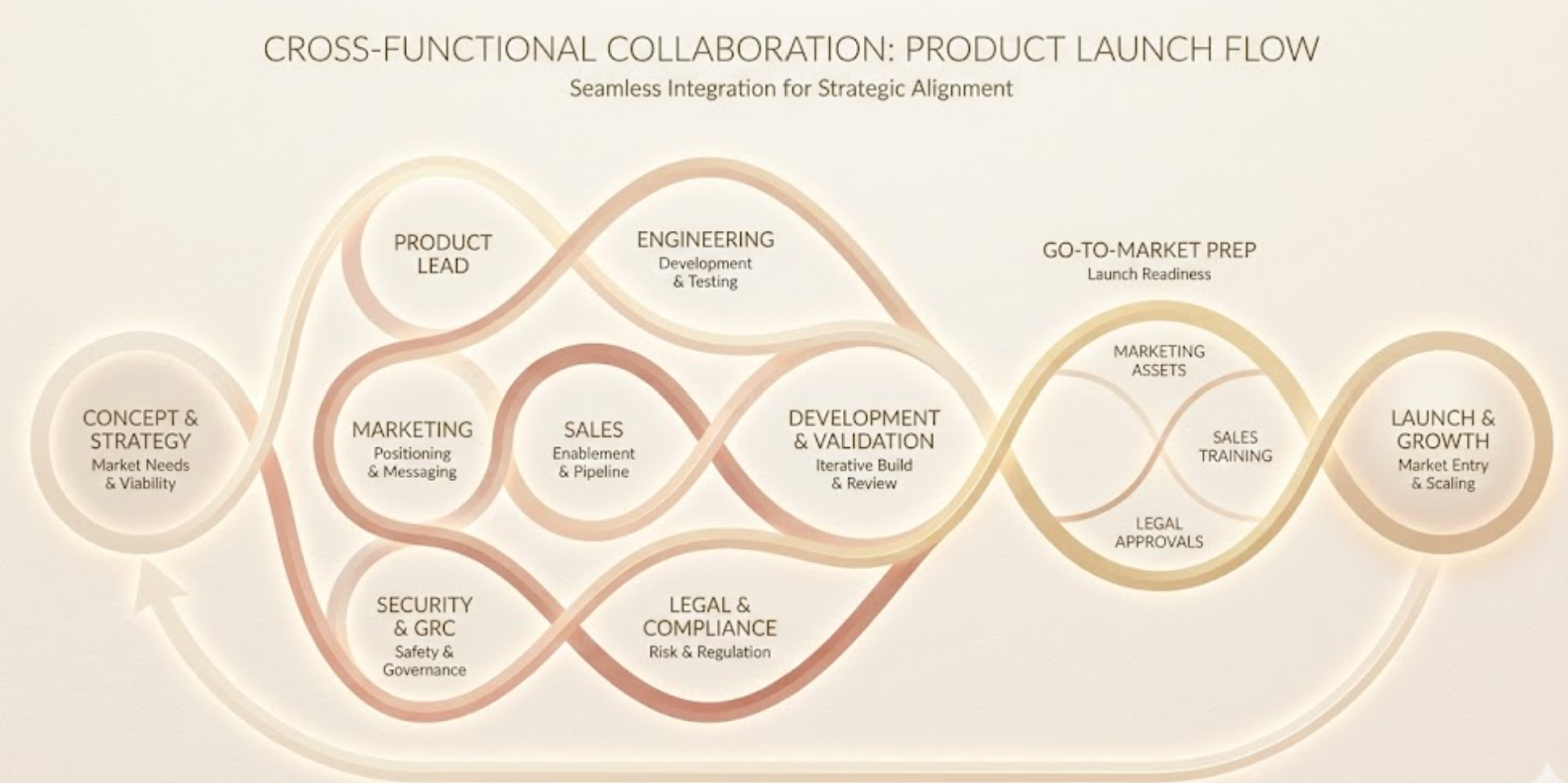
This project reflects my belief that responsible AI is just as much a GTM function as it is a technical one. Before a model ever reaches a user, there should be a strategy for how it’s explained, tested, supported, and governed across product, engineering, marketing, sales, legal, and security.
This framework was developed to address a recurring failure pattern: AI features reaching market before governance, risk, and customer narratives were aligned.
This is my playbook for releasing AI features with confidence, transparency, and intention , whether you’re an SMB building your first LLM-powered workflow or an enterprise preparing a public launch.
-
This framework provides a structured GTM readiness and compliance process for AI-powered features.
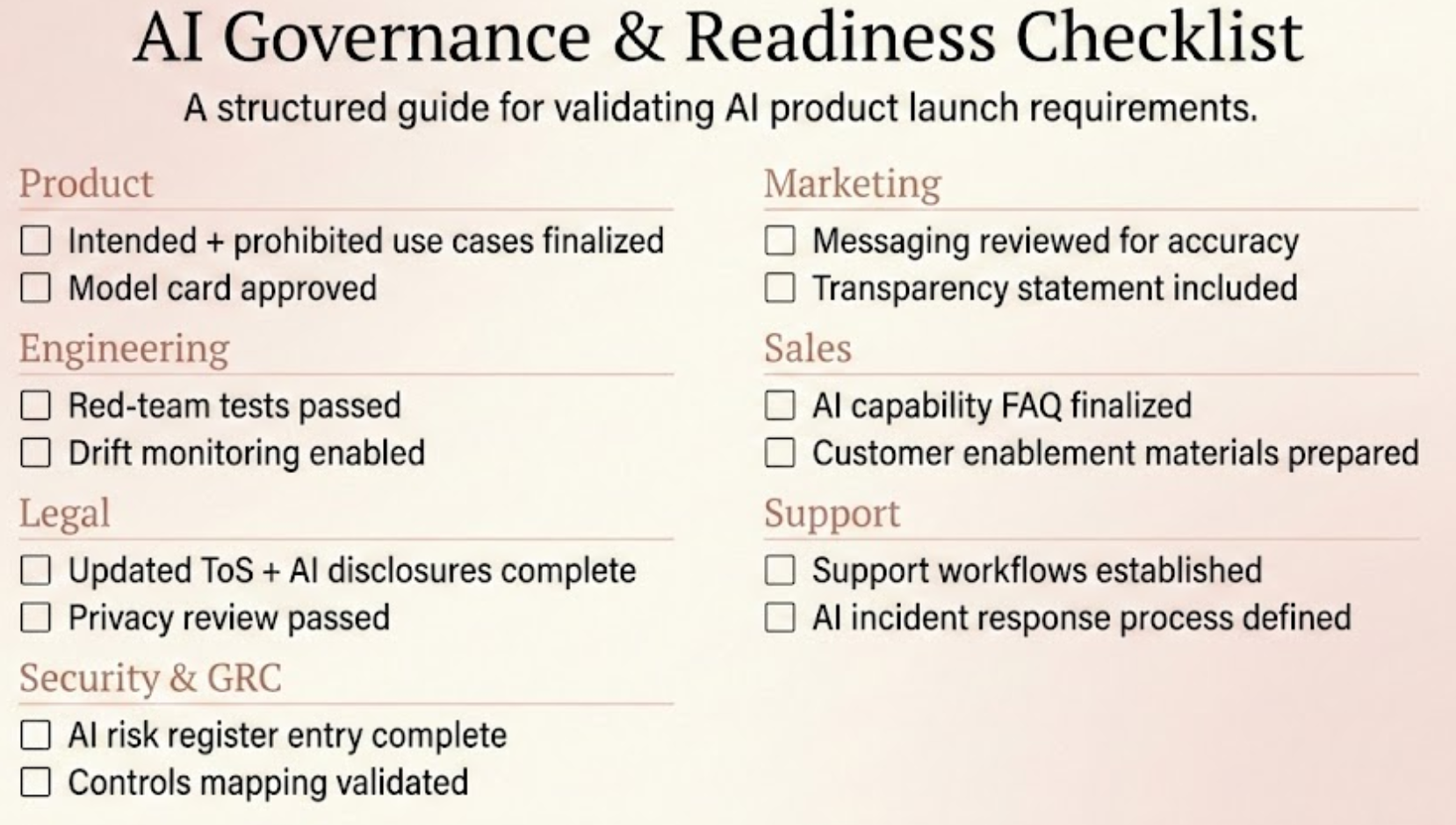
It ensures teams align before launch, risks are documented early, and customer-facing narratives match internal governance decisions.It includes readiness criteria across:
Product
Engineering
Legal & Privacy
Security & GRC
Marketing
Sales Enablement
Support & Monitoring
-
This work is informed by my experience supporting sales and client negotiations directly, where security requirements often became a gating factor for revenue. By defining engagement tiers, decision thresholds, and performance metrics, the goal is to enable faster go-to-market motion while maintaining a defensible security and risk posture.
In practice, this lens reduces last-minute escalations, shortens security review cycles, and creates clearer yes/no decision paths for sales teams.
-
This work is informed by my experience supporting security and contract transitions during multiple business divestitures, where existing agreements, obligations, and review processes needed to be reassessed under tight timelines. In those environments, security decisions directly affected customer confidence, deal continuity, and revenue stability, reinforcing the need for governance models that scale during organizational change rather than break under pressure.
-
AI features often get pushed to market before:
governance and GTM alignment
risk and messaging alignment
customer expectation mapping
compliance narratives
safety evaluations
lifecycle monitoring strategies
This creates:
Internal misalignment (governance, risk, lifecycle)
External misrepresentation (marketing, sales, customer expectations)
Operational fragility (support, monitoring, incident response)
Companies need a repeatable, cross-functional AI launch process that connects risk to product to GTM.
-
1. Product Readiness
Clear definition of AI functionality
Intended use vs prohibited use
UX expectations
Human-in-the-loop checkpoints
Failure mode identification
Model card availability
2. Engineering Readiness
Performance thresholds
Error handling
Red-team results reviewed
Logging & observability
Drift detection plan
3. Legal & Privacy Review
PII handling
Consent mechanisms
Data retention
Model transparency wording
Liability boundaries
Terms of use updates
4. Security & GRC
AI risk register
Compliance mapping
Deployment controls
Incident escalation flow
Model misuse detection
5. Marketing Alignment
Risk-aware messaging
No overpromising model capability
Ethical marketing patterns
Transparency statements
6. Sales Enablement
Honest capability breakdown
What the model cannot do
Customer FAQs
Use-case boundaries
Competitive positioning
7. Support & Monitoring
Clear paths for AI-related tickets
Escalation to engineering/legal
Customer-facing incident responses
Ongoing evaluation cadence
-
These recommendations are designed to be lightweight, repeatable, and compatible with existing enterprise processes.
Pre-Launch
Cross-functional review meeting
Final safety evaluation
Compliance documentation
Executive sign-off
Launch
GTM alignment
Messaging discipline
Sales + support readiness
Usage monitoring begins
Post-Launch
30/60/90 day AI performance review
Drift & failure mode analysis
Legal + risk reevaluation
Customer feedback loop
-
AI GTM Readiness Checklist (PDF)
Model Card Template
AI Risk Register
Controls Mapping
Transparency Statement Template
Sales Enablement One-Pager
Governance Review Workflow Diagram